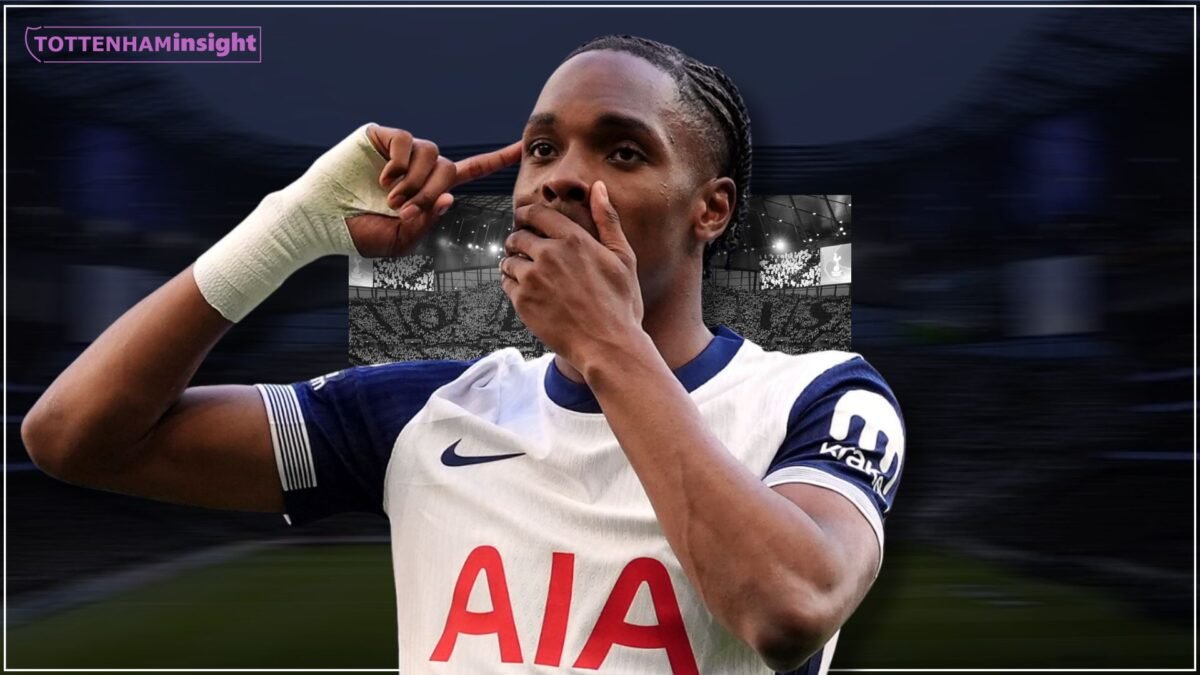
Half of Tottenham’s ten Premier League goals this season have come in the 86th minute or later, and only two have arrived before half-time. If Spurs want a calmer Saturday against Ipswich Town, the first job is to stop leaving everything until the end.
It is one of the strangest numbers in Roberto De Zerbi‘s first autumn. His side keep the ball, push teams back and usually look the better side, yet the goals tend to come only when the clock is nearly up. Five of the ten have been scored from the 86th minute onwards, and three of those were in stoppage time.
Ipswich come to N17 on Saturday at 3pm UK time (8.30pm IST) with Spurs 11th on 12 points and the visitors three places below them. De Zerbi will not even be on the touchline, after his third booking of the season at Leeds earned him a one-match ban. That makes a quick start more important than usual.
When have Tottenham scored their league goals?
Here is every league goal so far, in order. The pattern jumps off the page.
| Game | Result | Spurs scorers (minute) |
|---|---|---|
| Brentford (a) | Lost 3-0 | None |
| Newcastle United (h) | Lost 2-0 | None |
| Nottingham Forest (a) | Drew 0-0 | None |
| Everton (h) | Drew 0-0 | None |
| Aston Villa (h) | Lost 3-2 | Gallagher (86), Van Hecke (90+8) |
| Manchester United (a) | Drew 1-1 | Solanke (90+2) |
| Coventry City (h) | Won 3-1 | Maddison (14), Marmoush (58), Davies (90+6) |
| Chelsea (a) | Won 2-0 | Penders own goal (77), Tel (87) |
| Crystal Palace (h) | Won 2-0 | Gray (25), Van Hecke (73) |
| Leeds United (a) | Lost 1-0 | None |
Split it by halves and it gets starker. Eight of the ten goals came after the break. The only first-half goals of the season were James Maddison’s against Coventry City in the 14th minute and Archie Gray’s against Crystal Palace in the 25th, and both were at home. Away from N17, Spurs have not scored a first-half league goal all season.
Add the four goalless games and the Leeds defeat, and you get a team that has gone in at half-time level or behind in eight of its ten league games. That is a lot of pressure to put on the last 20 minutes.
Do the late goals actually win Spurs points?
Less than you would think. Look at what each of the five late goals was worth.
- Conor Gallagher (86) and Jan Paul van Hecke (90+8) against Aston Villa: Spurs had not scored until the 86th minute and still lost 3-2. Two goals, no points.
- Dominic Solanke (90+2) at Old Trafford: the one that really mattered. Ten-man Spurs equalised in stoppage time and took a point.
- Ben Davies (90+6) against Coventry: a third goal in a game Spurs were already winning.
- Mathys Tel (87) at Stamford Bridge: it made it 2-0 after Mike Penders’ own goal had put Spurs ahead, and it came after Cole Palmer had been sent off.
So only one of the five, Solanke’s, turned a result. The others either came too late to save a game or added gloss to a win that was already on its way. That is the problem with late goals as a habit: they feel dramatic, but they rarely change the table.
We made a similar point when we looked at how many of Spurs’ wins came against a full XI. The team that controls the ball for 80 minutes has not yet turned that control into early goals, and early goals are what make games comfortable.
Why are Spurs so slow to get going?
Part of it is the style. De Zerbi wants his side to build patiently, draw the press and wear the opposition down with the ball. That kind of football often looks better in the second half, when legs are tired and gaps start to open. None of the eight second-half goals came before the 58th minute.
The bigger part is the lack of a finisher. Only two of the ten goals came from a striker, Omar Marmoush against Coventry and Solanke at Old Trafford, and we went through why that hurts in our piece on Tottenham’s £65m striker losing his edge. When the chances in the first hour are half-chances, a side without a sharp number nine waits for the game to open up. Van Hecke, a centre-back, is the club’s top league scorer with two.
There is also the Maddison factor. He scored one of the two first-half goals, against Coventry, and he is in line to return for Ipswich. A player who can find a pass in the first 20 minutes, rather than the last 20, is exactly what this side has missed.
Is Ipswich the game to change it?
On paper, yes. Ipswich have taken only four points from 15 on the road, and they have conceded at least twice in four of their five away games, as we set out in our Tottenham vs Ipswich Town preview. Gary O’Neil’s side will not sit in a low block for 90 minutes, and that should leave space for Spurs to hurt them early.
Home form gives some hope too. Spurs have won their last two league games in N17, against Coventry and Crystal Palace, and both of the season’s first-half goals were scored in those games. Before that, they had failed to score at home against Newcastle United and Everton and lost to Aston Villa. The home record now reads two wins, a draw and two defeats, with seven goals scored and six conceded.
The worry is the touchline ban. If Spurs are level at the hour mark, the changes will be made with De Zerbi in the stand and his assistants, Andreas Georgson, Bruno Saltor and Andrew Crofts, running the bench. This is not the week to be relying on another 90th-minute rescue.
Verdict: Spurs need a goal before the break
Late goals show character, and nobody in N17 will complain about Solanke’s equaliser at Old Trafford. But a side with Europe in mind cannot keep making the last ten minutes do all the work. Half of the goals coming from the 86th minute on, and none in the first half away from home, is a pattern, not bad luck.
Ipswich are a side that concede on the road and come forward. If Maddison and Savio start, and Spurs play with the same tempo in the first half as they usually find in the second, this is the afternoon to score early and spend the last 20 minutes managing a lead for once. That would mean more to De Zerbi than any stoppage-time winner.